
Understanding Dementia
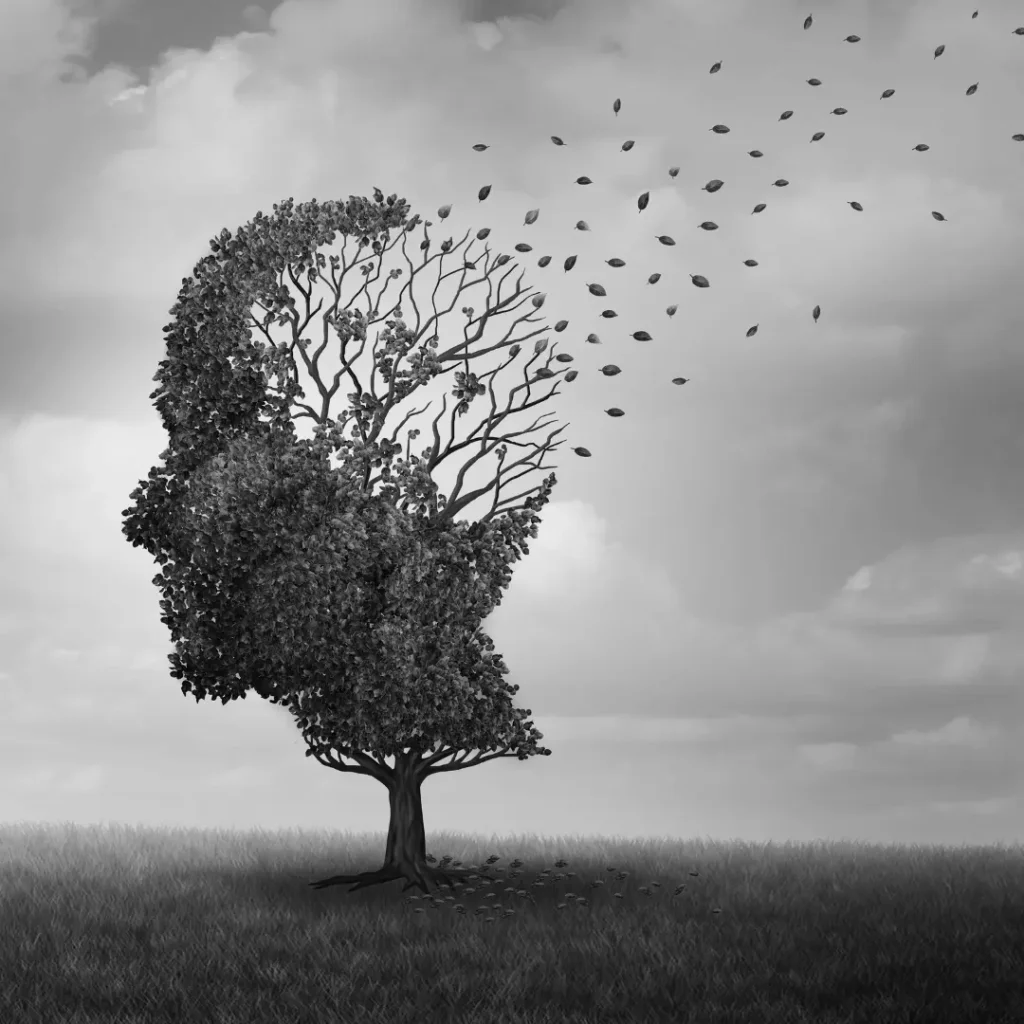
Dementia affects one’s memory and their ability to remember people and things. Studies show that by 2030, over 152,000 people in Singapore are projected to live with dementia. For every 3 seconds, someone in the world develops dementia. Approximately 5% of persons living with dementia develop symptoms before age 651
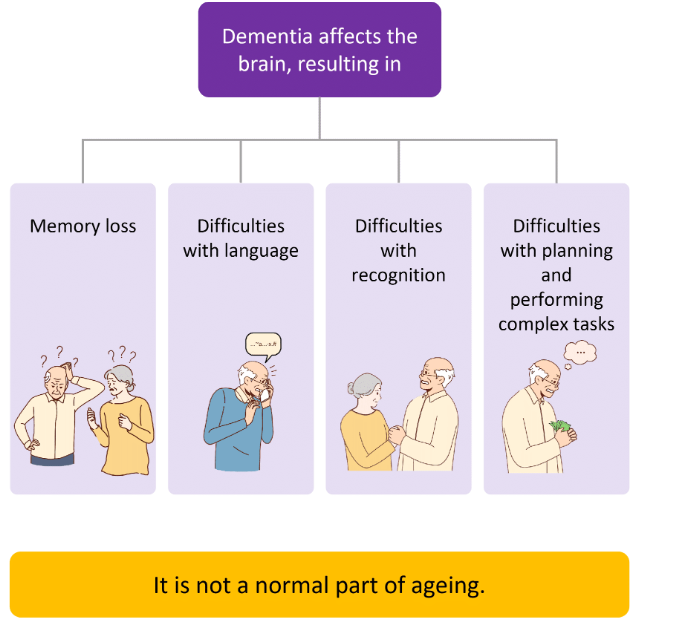
Types of Dementia
Alzheimer’s disease is the most common type of dementia. Mainly associated with memory loss.
Vascular Dementia is associated with strokes or other illnesses that reduce blood flow to the brain. Mainly associated with a decline in thinking skills.
There are several important factors that affect the risk of developing dementia; Age, Family history and genetics, Head injuries, and Conditions that affect blood vessels. A person’s risk of developing dementia depends upon a combination of all of these risk factors.
ABCD Signs and Symptoms of Dementia
Here are some of the common signs and symptoms of dementia. They can be classified as the ABCD signs and symptoms of dementia.
A – Activities of Daily Living
The person living with dementia may have difficulty performing familiar tasks such as: eating, dressing, bathing, toileting, transferring, and moving around
B – Behaviour
The person living with dementia may have behaviour changes such as; may become socially withdrawn, easily upset, and easily frustrated
C – Cognition
The person living with dementia may have memory loss and difficulty remembering things such as: being unable to recognise family members and familiar items, problems with languages, problems with judgement, and problems performing calculations
D – Disorientation
The person living with dementia may lose his or her way in less familiar places. They may have poor orientation of day, date or time. As the disease progress, they may no longer recognise their loved ones and their own home.
Communicating with Persons Living with Dementia
Persons living with dementia may face difficulties in their daily lives and require assistance. The KIND gesture can help us remember what to do and be more confident when we interact and assist persons living with dementia, especially in situations when they appear to be lost. When applying the KIND gesture with persons living with dementia, it allows us to build rapport and render assistance more effectively.

Reference:
Weave
Recent Posts
 Healthier SG
 Care Protocols 2027: What GP Clinics Should Update Before January
Healthier SG care protocols expand from January 2027. See what's new and 4 updates GP clinics should make…
 Clinic Insights
Public Health Preparedness Clinic: How GP Clinics Can Handle Haze-Season Patient Surges
Public Health Preparedness Clinic duties explained: MOH's 2026 haze scheme, eligible patients, and 6 ways GP clinics can…
 CMS
HIA Cybersecurity Requirements: The 13 Measures Singapore Clinics Need to Know
HIA cybersecurity requirements: MOH lists 13 measures for clinics, from backups to a 2-hour incident alert. Use this…
Related Posts
Mental Health Screening Software: How Singapore Clinics Add PHQ-9 and GAD-7 to Corporate Health Programmes
See how mental health screening software lets Singapore clinics add PHQ-9 and GAD-7 assessments to corporate…
Types of Mental Health Conditions
Different types of mental health conditions have different signs and symptoms and may vary from person…
Understanding the Signs and Symptoms of Mental Health Issues
In today’s world, the conversation around mental health has gained significant momentum, yet many individuals still…